
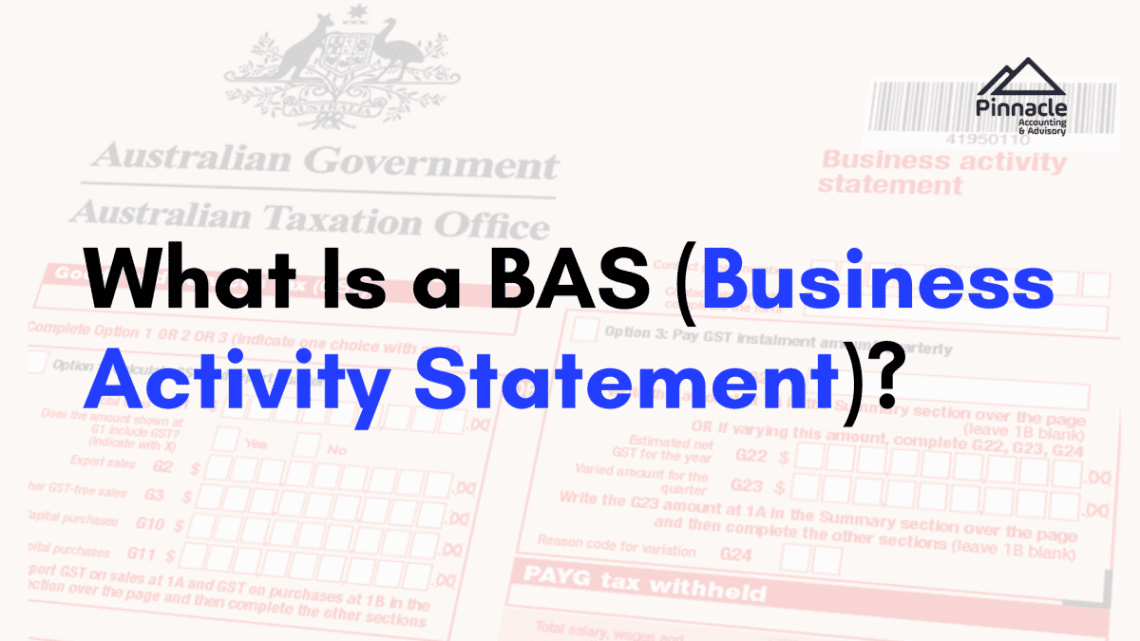
If you run a business in Australia, chances are you’ve heard of a BAS (Business Activity Statement), but many business owners still feel unsure about what it actually is, why it matters, and how to manage it properly.
Understanding your Business Activity Statement is crucial for every business owner.
The Business Activity Statement helps ensure your taxes are correctly calculated.
A BAS is one of the ATO’s primary tools for collecting taxes from businesses. Getting it right is critical for cash flow management, compliance, and avoiding penalties.
In this article, we explain what a BAS is, what it includes, who needs to lodge one, and how good systems and advice make BAS obligations far easier to manage.
Every Australian business must submit a Business Activity Statement for tax purposes.
What Is a Business Activity Statement (BAS)?

A Business Activity Statement (BAS) is a form businesses lodge with the Australian Taxation Office (ATO) to report and pay certain taxes.
Depending on your business, a BAS may include:
- Goods and Services Tax (GST)
- Pay As You Go (PAYG) withholding
- PAYG income tax instalments
- Fringe Benefits Tax (FBT) instalments
The ATO uses your BAS to reconcile what tax you’ve collected or withheld on its behalf.
The Business Activity Statement plays a key role in your business reporting.
Who Needs to Lodge a BAS?
Each Business Activity Statement lodgement represents a commitment to compliance.
Learning about your Business Activity Statement can save you time and money.
You generally need to lodge a BAS if your business is:
- registered for GST, or
- required to withhold tax from employees or contractors
This applies to:
- sole traders
- partnerships
- companies
- trusts
Even if no activity occurred during the period, a nil BAS may still be required.
How Often Is a BAS Lodged?
BAS lodgement frequency depends on your business size and ATO classification:
- Monthly – usually larger businesses
- Quarterly – most small businesses
- Annually – limited cases
Understanding and planning for these deadlines is essential, particularly around busy periods like January. We cover this in detail in
👉 January BAS Deadlines and ATO Obligations Every Business Owner Should Know
Correctly filing your Business Activity Statement is essential for maintaining good standing with the ATO.
What Taxes Are Reported on a BAS?

GST
If registered for GST, your BAS reports:
- GST collected on sales
- GST paid on business expenses
The difference determines whether you owe the ATO or receive a refund.
PAYG Withholding
Consider consulting an expert for your Business Activity Statement submissions.
Reviewing your Business Activity Statement helps avoid costly mistakes.
If you have employees, you must withhold tax from wages and report this on your BAS.
Each item in your Business Activity Statement needs careful consideration.
PAYG Instalments
The Business Activity Statement reflects your operational efficiency.
Many businesses also prepay income tax through PAYG instalments, which are reported and paid via the BAS.
FBT Instalments
Some businesses pay FBT instalments through their BAS rather than in a separate return.
Why BAS Management Is So Important
Poor BAS management is one of the most common causes of:
- cash flow stress
- ATO penalties and interest
- audit activity
Problems often arise when businesses:
- use GST funds for operating expenses
- fall behind on bookkeeping
- don’t separate tax money from business cash
This is why strong systems are essential, particularly proper account separation, as outlined in
👉 The 6 Bank Accounts Every Business Owner Needs
Not sure if you are getting your BAS right?
At Pinnacle Accounting & Advisory we help Melbourne business owners get your BAS prepared and lodged accurately, on time. Book a consultation with Mina to find out where you stand.
Book a ConsultationOr watch the video:
BAS and ATO Audit Risk
BAS errors, inconsistencies, or unusual claims can trigger ATO reviews or audits.
Common red flags include:
- unusually large GST refunds
- inconsistent BAS and tax return data
- late or frequent amended BAS lodgements
If selected for review, having clean records and professional support makes the process significantly easier. We explain this further in
👉 ATO Audit Support for Businesses: What It Is and Why It Matters
BAS and Cash Flow Planning
A BAS is not just a compliance document — it’s also a cash flow event.
Failing to plan for BAS payments often leads to:
- scrambling for funds
- payment plans with the ATO
- compounding stress
Understanding your numbers and reviewing them regularly allows you to plan BAS obligations instead of reacting to them. This principle is discussed in
👉 The Truth About Sales & Accounting: Why Knowing Your Numbers Is the Ultimate Business Strategy
Or watch the video:
Common BAS Mistakes to Avoid
Some of the most common BAS mistakes include:
- claiming GST on non-creditable expenses
- missing lodgement deadlines
- reporting incorrect sales figures
- not reconciling bank accounts before lodgement
These issues are almost always preventable with consistent bookkeeping and professional oversight.
How Professional BAS Support Helps
Working with an accountant or BAS agent helps ensure:
- accurate GST reporting
- correct PAYG calculations
- timely lodgements
- reduced audit and penalty risk
It also frees business owners to focus on growth instead of compliance stress.
Final Thoughts
A BAS is a core part of running a business in Australia — not just a form to lodge, but a reflection of your business systems and financial discipline.
When managed correctly, a BAS:
- supports cash flow planning
- reduces ATO risk
- improves financial clarity
When ignored or rushed, it becomes a source of ongoing stress.
Understanding your BAS obligations — and setting up the right systems early — is one of the smartest moves any business owner can make.
Disclaimer
Careful management of your Business Activity Statement is vital for your business health.
This article is general information only and does not constitute tax or financial advice. BAS obligations vary depending on individual circumstances. Always seek advice from a qualified accountant or BAS agent.
Don’t underestimate the importance of your Business Activity Statement in tax planning.
Ultimately, your Business Activity Statement is a key indicator of financial health.
Mastering your Business Activity Statement can lead to better financial management.
What is a BAS used for in Australia?
A BAS is used by the ATO to collect and reconcile business taxes such as GST, PAYG withholding, PAYG instalments, and FBT instalments. It allows businesses to report and pay these obligations on a regular basis.
Do I need to lodge a BAS if my business has no activity?
Yes. If your business is registered for GST or required to lodge a BAS, you may still need to submit a nil BAS even if there was no activity during the reporting period.
How often do I need to lodge a BAS?
BAS lodgement frequency depends on your business size and ATO classification. Most small businesses lodge quarterly, while larger businesses may be required to lodge monthly.
What happens if I lodge my BAS late?
Late BAS lodgements can result in ATO penalties, interest charges, and increased compliance scrutiny. Repeated late lodgements may also limit future payment plan options.
This article contains general advice only and does not take into account your specific circumstances. Please speak with a qualified accountant or tax adviser before making financial decisions.
One decision that changes every BAS you ever lodge is whether you report GST on a cash or an accruals basis. Our guide to GST cash vs accruals sets out who can choose, and what each method does to your cash flow.
Ready to do Business with Us?
Join countless small businesses and work with
Australia’s leading Small Businesses Accountants so you can
focus on growing your business – while we take care of the numbers.